
FROM A BUNCH OF GRAPES TO A CONSISTENT PRODUCT: WHY IS GRAPE FLAVOR USED IN F&B?
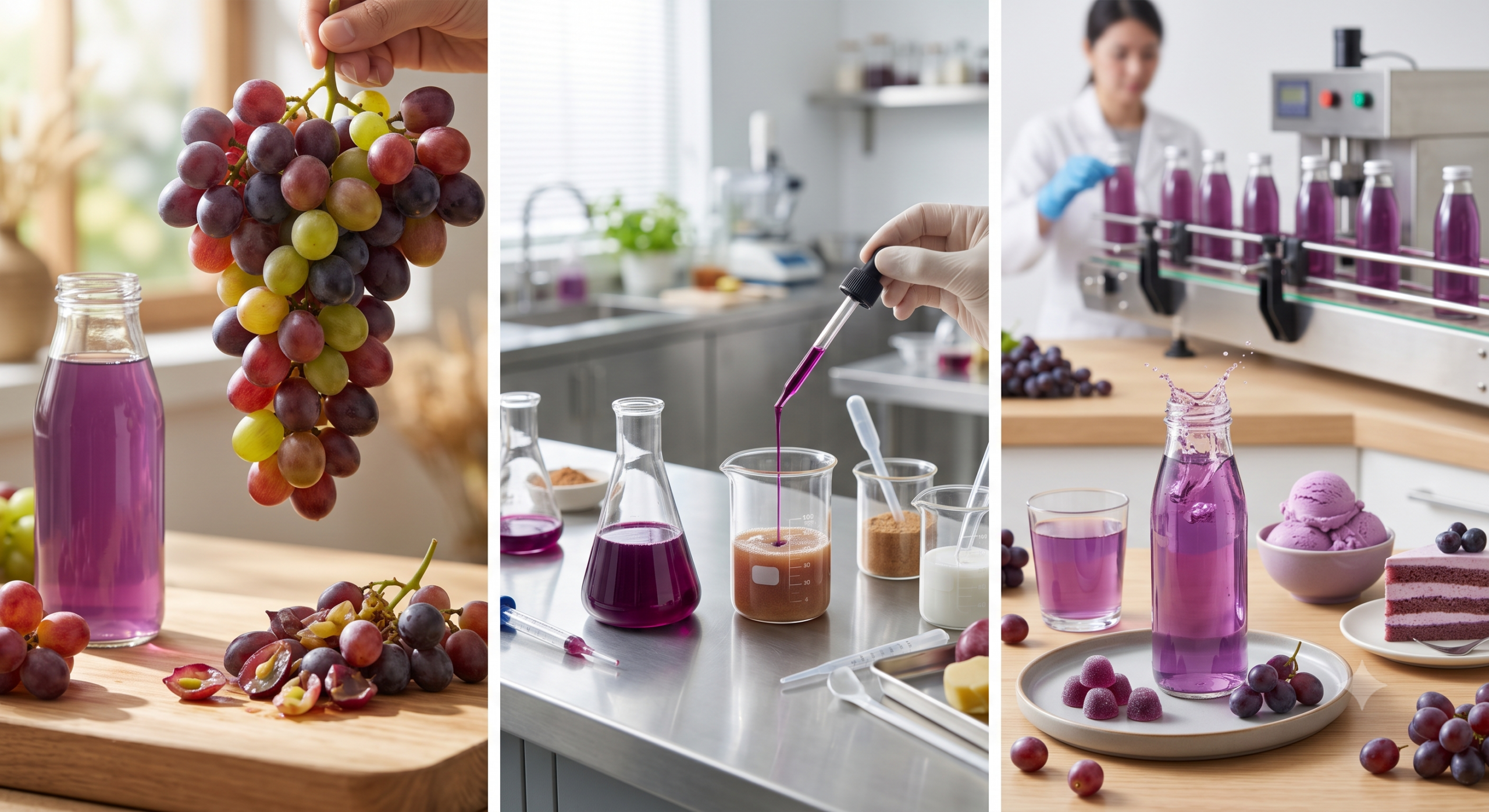
Imagine you are developing a grape-flavored beverage.
You want the product to have a clear grape aroma as soon as the bottle is opened. When consumed, customers should experience the distinctive fruity taste. And more importantly, the first bottle and the one-millionth bottle should deliver an almost identical experience.
But relying solely on real grapes is not always that simple.
Grapes can vary in variety, season, ripeness, growing region, and storage conditions. All of these factors can affect the final flavor profile.
That is where the story of grape flavor begins.
When Real Fruit Is Not Always Enough
In a food formulation, using real fruit ingredients offers many benefits. However, not every product can use large amounts of grape juice or grape extracts.
Some formulations require strict control over:
- Ingredient costs.
- Consistency between production batches.
- Aroma stability after heat processing.
- Shelf stability.
- Product color and clarity.
- Flavor consistency.
If the characteristics of grapes change from one season to another, the final product may change accordingly. For a brand producing thousands or even millions of products, such variation can be difficult to accept.
Consumers who purchase a product today and buy it again the following month still expect a familiar experience.
Flavoring Does Not Replace Grapes — It Solves a Different Challenge
This is an important point. Flavoring is not necessarily used to “completely replace” fruit ingredients. In many formulations, it is used to enhance and control the aroma profile that the product needs.
For example, a beverage may use fruit ingredients to provide taste and a natural fruit sensation, while grape flavor is added to enhance its characteristic aroma.
When the bottle is opened, the grape aroma becomes more noticeable. When consumed, the aroma continues to support the overall sensory experience. As a result, the product can achieve a clearer and more consistent flavor profile.
It is not a question of “real grapes or flavoring.” It is about how the different ingredients in a formulation can work together most effectively.
So, Why Grape Flavor?
Among fruit flavors, grapes have one particularly distinctive advantage:
High recognizability. A characteristic grape aroma can quickly trigger an association with grapes in consumers’ minds. This is especially valuable for products where consumers need to recognize the intended flavor from the very first experience.
When a product is positioned as “grape,” its aroma becomes one of the key elements reinforcing that identity.
Where Is Grape Flavor Used?
Looking at the F&B market, grape flavor can be found across a wide range of product categories:
Beverages: Soft drinks, fruit beverages, soda, fruit tea, energy drinks, and syrups.
Dairy & Dairy-Based Products: Grape milk, yogurt, ice cream, and pudding.
Bakery & Confectionery: Hard candies, soft candies, gummies, marshmallows, cakes, and fillings.
Desserts: Jelly, gel desserts, mousse, and other dessert products.
The common requirement across these applications is simple: Consumers need to recognize that “this is grape flavor.” But achieving that requires a flavor profile that is suitable for each product base.
Behind a Consistent Grape Beverage Is a Formulation Challenge
Consumers may only see the finished product.
But behind it lies a series of questions related to the production process:
Can the flavor withstand the production process?
Will it change during heat processing?
Is it suitable for the beverage base?
Will it be affected by the pH level?
Will it blend well with other ingredients?
Is the flavor intensity appropriate?
And most importantly:
After going through all these steps, will the product still deliver the grape experience that consumers expect?
This is why flavoring becomes an important part of the product development process.
From “Smells Like Grape” to “Experiences Grape”
A successful product does not simply need an aroma. It needs a complete sensory experience. The aroma should complement the taste. The taste should work with the texture. The color should create the right association. And everything should work together toward the image that the brand wants consumers to remember.
Therefore, the question during product development should not simply be:
“Do we need grape flavor?”
Instead, it should be:
“What kind of experience do we want grape flavor to create in our product?”
That is where a good formulation begins.
GRAPE FLAVOR – WHEN AROMA BECOMES PART OF THE FORMULATION
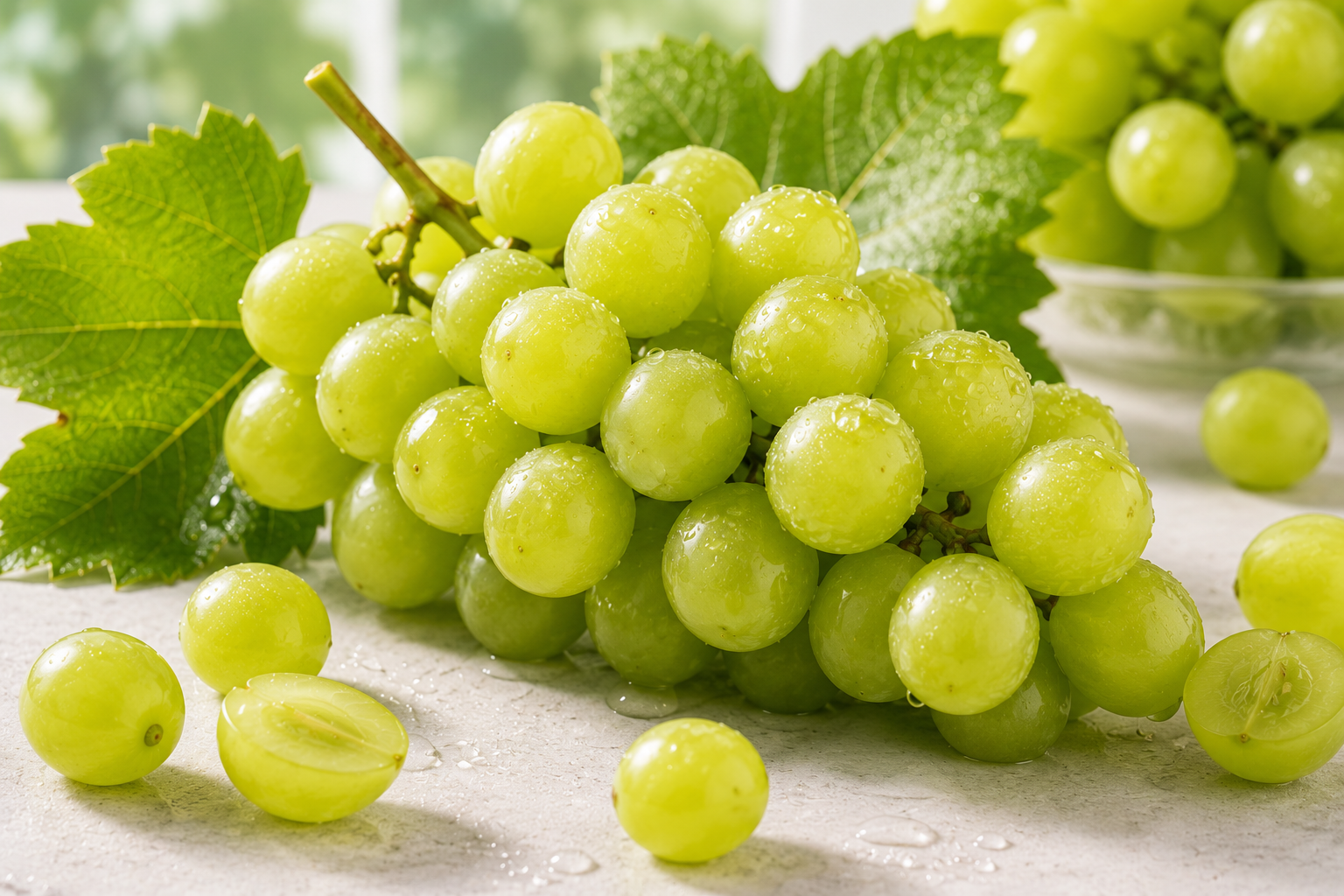
From soft drinks, tea, and soda to milk, ice cream, jelly, and confectionery, grape flavor can be developed in different directions depending on the product base and the desired sensory experience.
LSEATEX provides flavor solutions for a wide range of applications in the F&B industry.
📩 Contact LSEATEX for consultation and sample requests!
📍LSEATEX Vietnam
📞 Contact: 070.8866.356 – 028 36220923
🏢 Address: No. 2, Street 24, An Khanh Ward, Ho Chi Minh City
💬 Fanpage: facebook.com/Lseatex
🌐 Website: http://lseatex.com