
GRASS JELLY – WHEN A FAMILIAR FLAVOR STEPS BEYOND THE TRADITIONAL DESSERT
There are some flavors we recognize before we even have time to name them.
A glass of drink is placed on the table. Its color is dark, ice cubes gently clinking against the sides. A subtle aroma drifts through the air — not reminiscent of fruit, not creamy like milk, and not sweet in the familiar way of confectionery.
Just one fleeting note is enough for a familiar name to immediately come to mind:
Grass jelly.
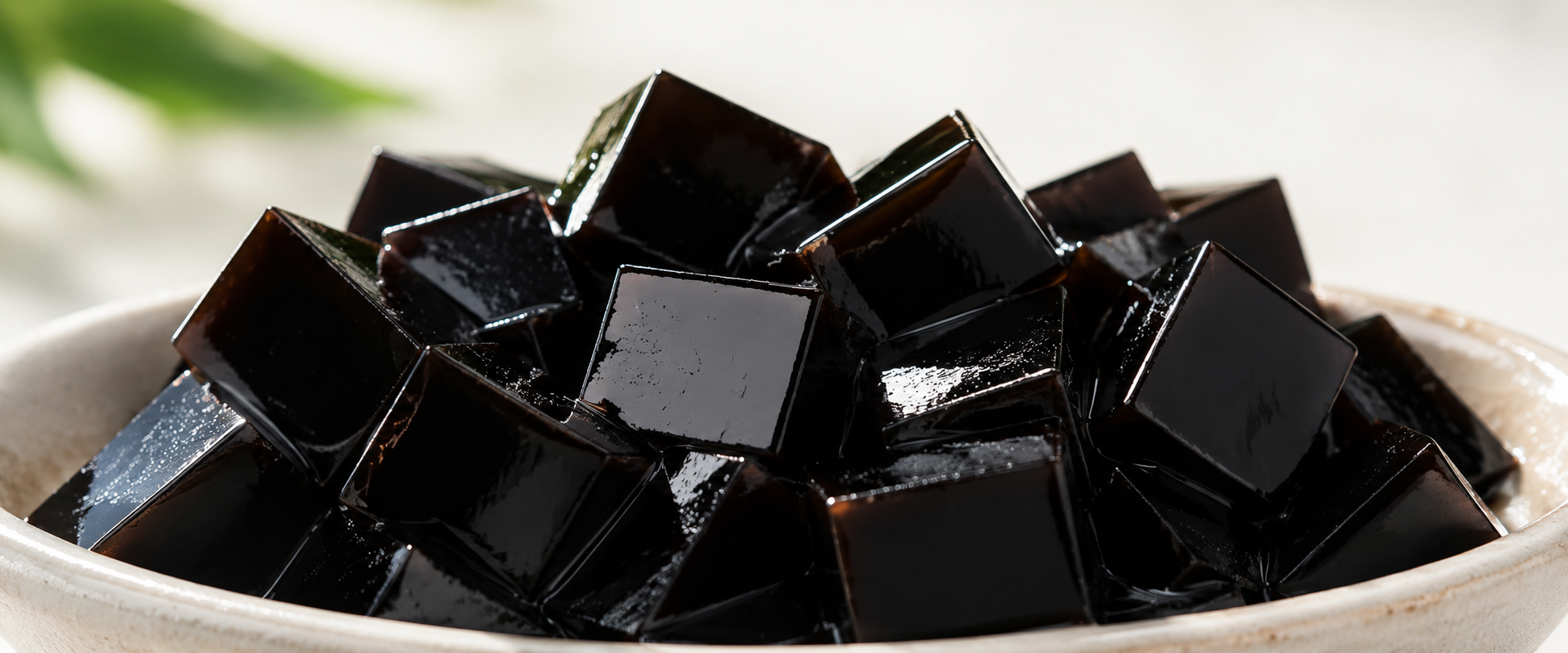
What makes it even more interesting is that even without the familiar image of dark grass jelly cubes in a traditional dessert bowl, we can still recognize its characteristic aroma.
So, what makes a flavor so distinctive and familiar that just a hint of its aroma can bring it back to mind?
What Do We Really Remember About Grass Jelly?
When we think of grass jelly, very few people think of it as simply an aroma.
Instead, they often remember a moment or a setting: a chilled dessert, a hot afternoon, a familiar dessert stall by the street, or a comforting treat enjoyed after a meal.
In other words, our memory of grass jelly is formed by many elements at once: its aroma, sweetness, refreshing coolness, color, soft and slightly chewy texture, as well as the ingredients it is commonly paired with.
That is what makes grass jelly more than just an ordinary flavor.
It is not simply an ingredient, but an experience preserved in our memory.
What If Only the Aroma Remained?
Imagine this for a moment: no dessert bowl, no grass jelly cubes, and no characteristic dark color.
There is only an aroma left.
Would we still recognize it?
The answer lies in the human ability to associate aromas with memories. Our sense of smell is closely connected to memory, which is why a familiar aroma can quickly bring back an image or experience we have encountered before.
Grass jelly is no exception.
A well-developed flavor profile does not necessarily need to contain countless notes. It only needs to capture enough of its defining characteristics to evoke a familiar image in the consumer’s mind.
That is when an aroma becomes more than just a scent — it becomes a recognition signal.
Grass Jelly Is Not Simply a “Sweet” Aroma
This is also what makes grass jelly different from many familiar food flavors.
Strawberry often evokes fruity sensations, orange carries a distinct citrus character, while vanilla creates a sweet, creamy and warm impression.
Grass jelly, on the other hand, belongs to a more subtle and difficult-to-define sensory category.
Its aroma can carry herbal notes, a green character, a touch of freshness, and the distinctive nuances associated with botanical ingredients.
However, these characteristics are generally expressed in a relatively gentle way.
That is why simply making a flavor “stronger” does not necessarily make it “more like grass jelly.”
This is an important distinction in flavor development:
Intensity does not always mean authenticity.
An overly strong profile may make consumers perceive “herbal” notes, yet fail to evoke the familiar identity of grass jelly.
In contrast, a well-balanced profile can create a sense of familiarity from the very first encounter.
From a Traditional Dessert to a Product Concept
Grass jelly has long held a familiar place in Asian food culture.
However, the food industry is constantly evolving, and consumers are increasingly experiencing familiar flavors in new forms.
An ingredient once associated with a traditional dessert can now inspire ready-to-drink beverages, milk tea, pudding, jelly, or even products that we may never have associated with grass jelly before.
This creates an interesting question:
How can we preserve the “grass jelly experience” when the form of the product has changed?
This is no longer simply a question of ingredients.
It becomes a question of sensory perception and the ability to recreate a familiar experience.
When the Traditional Ingredient Is No Longer Used in Its Original Form
In a traditional dessert, consumers can see the grass jelly, feel its texture and directly enjoy its characteristic taste.
But with many other product formats, this is no longer possible.
For example, a bottled beverage does not necessarily need to contain visible pieces of grass jelly to create a grass jelly experience.
This is where flavor becomes one of the important elements in building sensory identity.
A suitable flavor profile can evoke familiar associations, even when the original ingredient is no longer presented in its traditional form.
This is one of the fascinating roles of food flavoring in product development: it does not simply create an aroma, but can also help recreate a familiar experience in an entirely new format.
The Challenge Is Not Simply “Creating a Grass Jelly Aroma”
From a product development perspective, a more important question may be:
What should consumers recognize from the product?
Is it the herbal character?
The feeling of freshness?
The combination with sweetness?
Or the memory of a familiar traditional dessert?
The answer will determine how the flavor profile should be developed.
Although two products may both be described as having a “grass jelly flavor,” their sensory direction may need to be completely different depending on the final application.
A product designed to evoke a traditional experience may require familiar sensory cues, while a product aimed at younger, modern consumers may benefit from a lighter, fresher and more versatile interpretation.
Grass Jelly and the New Generation
There is something worth noting:
Traditional flavors do not necessarily have to remain in their original forms forever.
Instead, they can be “translated” into the language of modern food and beverage products.
Yesterday, it was:
Traditional grass jelly desserts.
Today, it can become:
grass jelly milk tea, grass jelly fresh milk, grass jelly beverages, grass jelly jelly desserts, or grass jelly-inspired desserts.
The name may change.
The way it is consumed may change.
But what matters is that consumers can still recognize the familiar feeling behind the product.
And that is what makes local and traditional flavors so interesting: they have the potential to move beyond their traditional formats and become part of new consumption experiences.
Not Every Flavor Needs to Be the “Main Character”
A product does not always need grass jelly flavor to take center stage.
Instead, it can act as a supporting layer, contributing depth to the overall sensory profile.
A subtle grass jelly note within a tea base.
A touch of grass jelly alongside milk.
Grass jelly combined with coconut.
Or a delicate profile that helps balance and complete the overall sensory experience.
In such cases, consumers may not necessarily say:
“I can smell grass jelly.”
Instead, they may simply feel:
“This aroma feels so familiar.”
And sometimes, that is precisely the sign of a well-developed flavor profile.
From Memory to Formula
Behind every familiar sensory experience lies a technical challenge.
When incorporating grass jelly flavor into a product, various factors need to be considered, including the product base, sweetness, acidity, dispersion system, processing temperature, timing of flavor addition, and interactions with other flavoring components.
However, rather than starting with the question:
“How much flavor should we use?”
A more appropriate approach is to start with:
“What do we want consumers to experience when they use this product?”
From there, the appropriate flavor profile can be selected and tested to achieve the desired sensory experience.
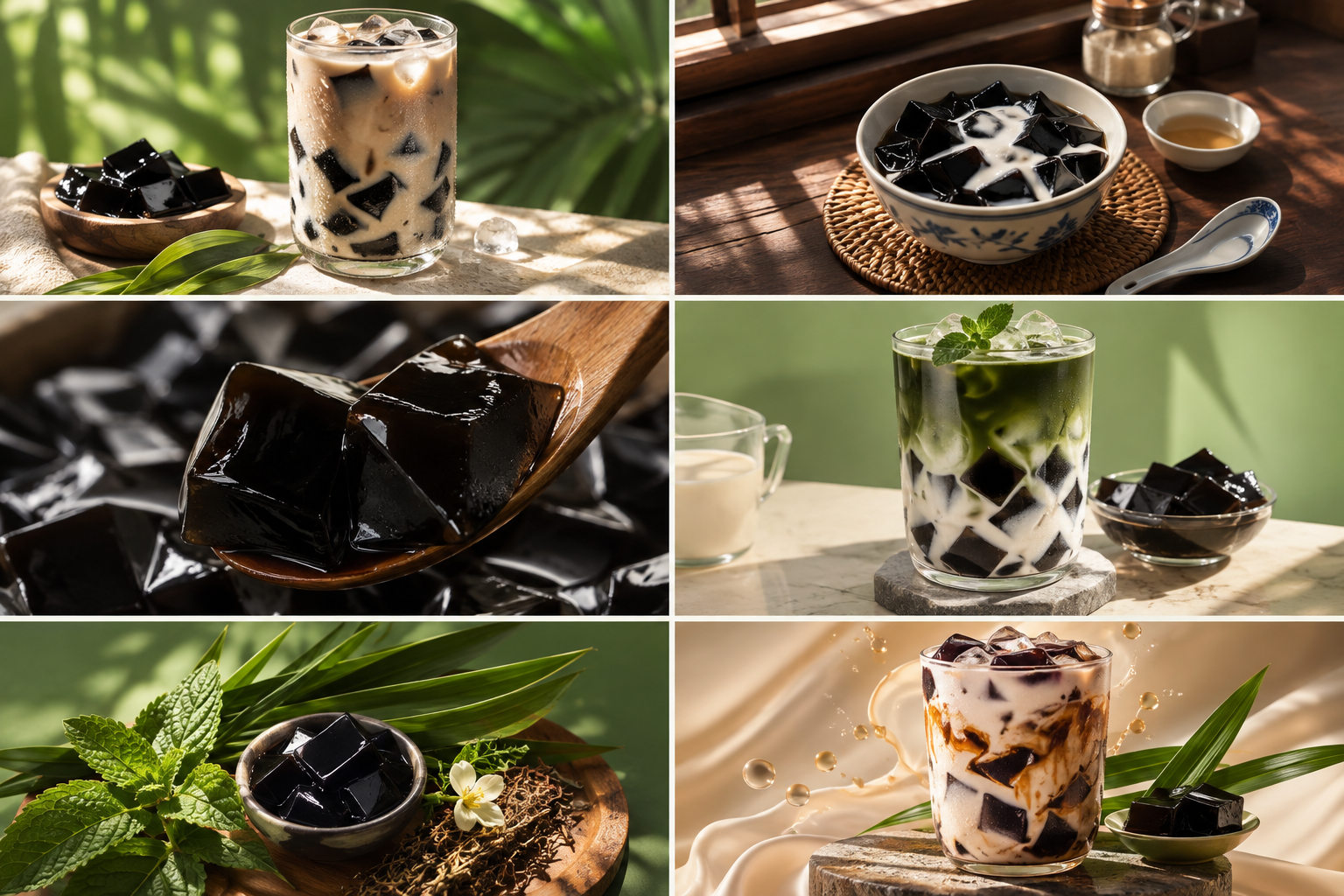
LSEATEX – Telling a Familiar Flavor in a New Way
In product development, flavoring is not simply an ingredient used to create aroma. It can also become part of the product concept and overall sensory experience.
For grass jelly flavor, selecting the right profile should be considered in the context of the specific formulation and product direction, helping create a balanced sensory experience that aligns with the intended consumer perception.
LSEATEX provides food flavoring solutions for businesses developing products across beverages, dairy, confectionery, desserts, and processed foods.
📩 Contact LSEATEX for consultation and samples!
📍 LSEATEX Vietnam
📞 Contact: 070.8866.356 – 028 3622 0923
🏢 Address: No. 2, Street 24, An Khanh Ward, Ho Chi Minh City, Vietnam
💬 Fanpage: facebook.com/Lseatex
🌐 Website: lseatex.com