
COCONUT – FROM A GLASS OF COCONUT WATER TO SWEET AND SAVORY DISHES IN VIETNAMESE CUISINE
When talking about coconut, many people immediately think of a refreshing glass of coconut water, a bowl of coconut dessert, or cakes with a distinctive creamy coconut flavor.
But in Vietnamese cuisine, coconut has never been limited to sweet dishes. Coconut water can become an ingredient in rich and savory braised dishes. Coconut milk appears in desserts, cakes, and dishes with a tropical character. Coconut flesh is used in many dishes and processed food products. Even just a touch of coconut aroma can evoke a very distinctive feeling of Vietnamese cuisine.
From a single coconut, Vietnamese people have created an entire world of flavors.
Starting with the Simplest: Coconut Water
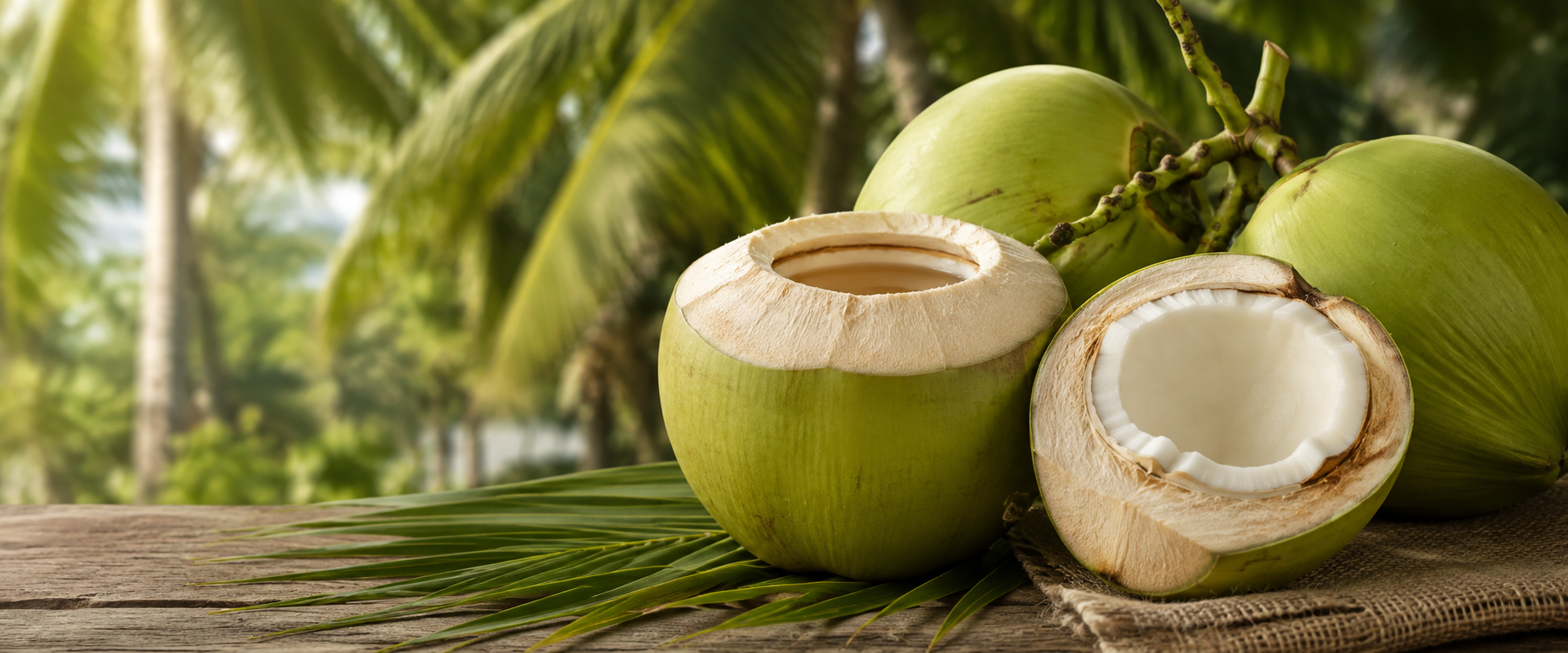
Perhaps coconut water is one of the simplest ways to experience the flavor of a coconut. No complicated preparation. No need for too many ingredients. Simply open a coconut and pour the refreshing coconut water into a glass. Its light, naturally sweet taste and refreshing sensation are enough to create a familiar beverage.
But what is interesting is that coconut water is not only meant to be enjoyed as a drink. In Vietnamese cuisine, it is also used as an ingredient in cooking. And from here, the story of coconut begins to move from beverages to savory dishes.
When Coconut Water Enters Savory Cuisine
One of the familiar images of Vietnamese cuisine is braised dishes with a glossy brown color, rich flavors, and a subtle sweet aftertaste.
Many of these dishes use coconut water to create natural sweetness and add depth to the overall flavor.
- Pork braised with coconut water.
- Fish braised with coconut water.
- Braised shrimp.
- Stewed dishes.
- Sauced dishes.
Coconut water does not necessarily turn a dish into a clearly recognizable “coconut dish.” It works in a more subtle way. It helps create sweetness, tenderness, and harmony throughout the dish.
This is one of the most interesting things about coconut:
Coconut does not always need to be noticeable. Sometimes, it simply needs to make the dish taste better.
From Savory Dishes Back to the World of Sweet Flavors
If savory dishes make use of the natural sweetness of coconut water, desserts explore another side of the coconut.
Coconut milk appears in many familiar dishes, from traditional to modern desserts.
Here, coconut is no longer simply about providing sweetness. It becomes a layer of aroma and texture that makes the dish feel richer and more complete.
From Vietnamese Cuisine to Modern F&B Formulations
What is interesting is that these traditional applications of coconut continue to inspire modern products. Coconut water becomes a base for beverages. Coconut is combined with tea. Coconut is combined with coffee. Coconut is combined with fruit. Coconut appears in smoothies, milkshakes, and sodas. Coconut flavor is incorporated into cakes, ice cream, chocolate, and dessert products.
And even the sensory experience of familiar dishes such as “coconut water braised dishes” or “coconut milk-based dishes” can become inspiration for developing new flavor profiles.
Why Does Coconut Have Such a Wide Range of Applications?
Because coconut has many different “dimensions.” Coconut water provides a refreshing and lightly sweet sensation. Coconut flesh brings a creamy, soft, and aromatic character. Coconut milk creates a rich and creamy sensation.
Coconut flavor can be developed in many directions, from fresh coconut and coconut water to rich coconut and dessert-style coconut. Each profile can be suitable for different applications. And this is exactly why coconut can go from a refreshing beverage to a braised dish, and then become a dessert.
When Coconut Flavor Becomes a Product Development Tool
In F&B production, not every formulation can use a large amount of real coconut ingredients.
- Cost.
- Raw material availability.
- Consistency.
- Production processes.
- Storage conditions.
All of these are factors that need to be considered.
In such cases, coconut flavor can be used to supplement and control the characteristic coconut aroma in a product. The important question is not simply how to create a product that “smells like coconut.” It is about identifying what type of coconut character the product needs. From there, selecting a suitable profile can help the product maintain the desired coconut identity envisioned by the product developer.
From Traditional Cuisine to the Future of F&B
Today, consumers are not only looking for new flavors. They also want familiar flavors to be presented in new ways.
What once appeared in Vietnamese kitchens can now become inspiration for modern F&B formulations.
And perhaps the story of coconut has never been simply the story of a fruit. It is the story of how one ingredient can move across beverages, savory dishes, sweet dishes, and even new F&B trends.
From coconut water, braised dishes, desserts, and cakes to beverages, ice cream, and desserts, coconut can be applied in many different directions depending on the formulation and the experience the product aims to deliver.
LSEATEX provides coconut flavors and flavor solutions for a wide range of applications in the F&B industry.
📩 Contact LSEATEX for consultation and sample requests!
📍 LSEATEX Vietnam
📞 Contact: 070.8866.356 – 028 36220923
🏢 Address: No. 2, Street 24, An Khanh Ward, Ho Chi Minh City
💬 Fanpage: facebook.com/Lseatex
🌐 Website: http://lseatex.com
#LSEATEX #CoconutFlavor #Coconut #HuongDua #VietnameseCuisine #VietnameseFood #FoodFlavoring #FoodIngredients #FNB #FlavorDevelopment #FoodInnovation #CoconutFlavoring #ProductDevelopment