
ORANGE FLAVOR IS MORE THAN JUST ONE SHADE
Oranges are orange. That is probably the first thing we think of when we mention this fruit.
But if we place a whole orange, freshly grated orange peel, a glass of orange juice, a slice of orange cake, and an orange candy side by side, we will notice something interesting:
They all evoke the aroma of orange, but they do not create exactly the same perception of orange.
In some products, orange appears bright and juicy. In others, it feels sweet and soft. Some bring out the rich, aromatic, slightly zesty character of orange peel. And in some products, orange is combined with milk, cream, or chocolate to create an entirely different experience.
So, what exactly is “orange flavor”?
Is simply creating an aroma that smells like an orange enough?
The answer is much more interesting.
One Orange Can Tell Many Stories
Let’s start with an orange.
When it is still green, the orange has a different character.
As it begins to ripen, its color changes, the taste becomes sweeter, and its aroma also evolves.
When the peel is removed, another layer of aroma emerges.
When the fruit is squeezed into juice, the experience becomes fresh and juicy.
When it is cooked into marmalade, the orange character becomes richer, sweeter, and more concentrated.
When combined with cake, cream, or chocolate, orange becomes a supporting flavor that complements other ingredients.
It is still orange, but each form tells a different story.
And that is exactly what makes orange flavor development so interesting.
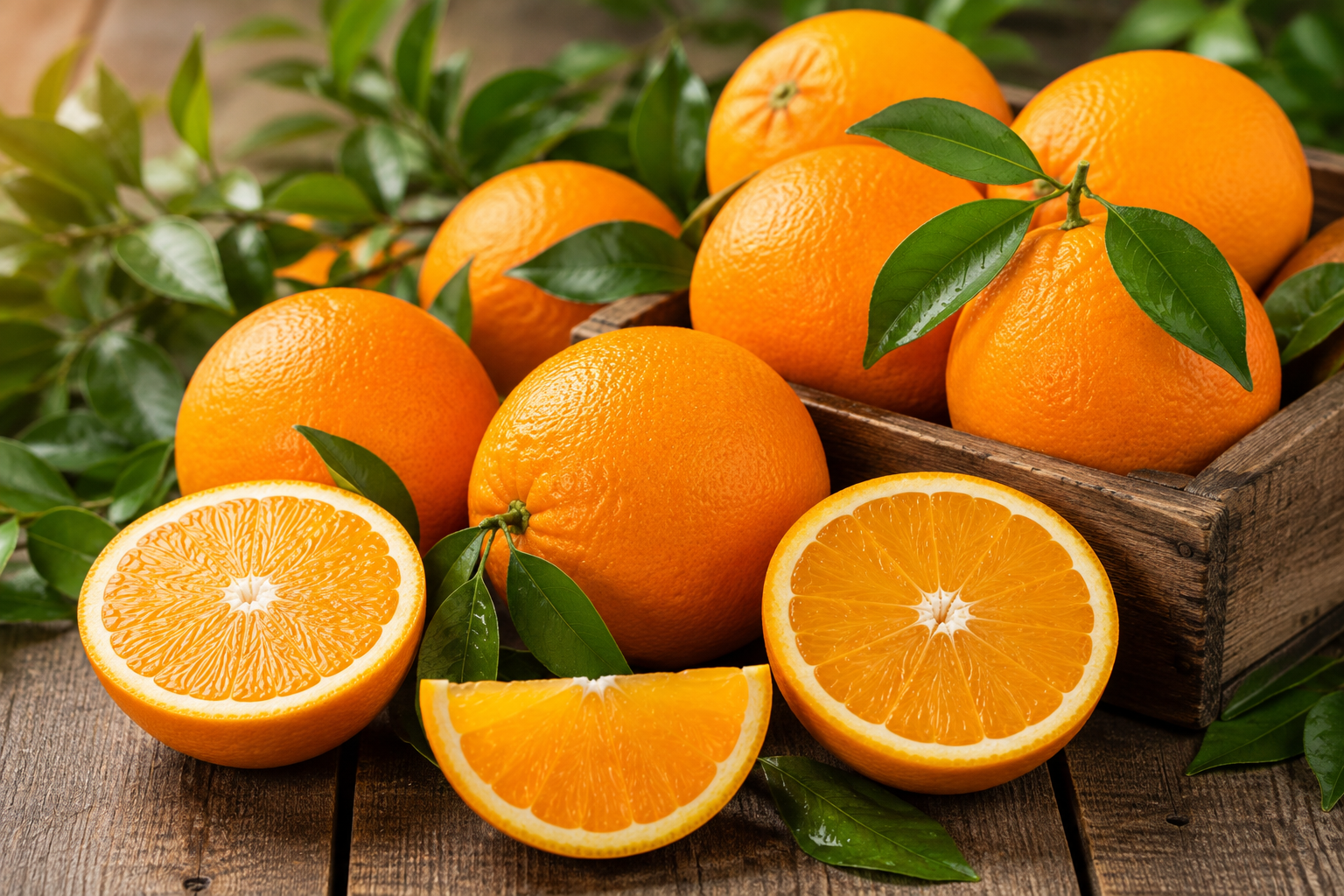
Figure 1: Fresh orange
Fresh Orange – A Story of Vibrancy
There is a very distinctive sensation when we cut an orange in half.
The aroma immediately spreads.
Not too heavy.
Not overly sweet.
Instead, it feels bright, fresh, and almost full of juice.
This is the character we often associate with:
Fresh – Juicy – Citrus – Bright.
In product development, this profile is often suitable when the goal is to create a refreshing and invigorating sensation.
It can be used in:
- Orange juice.
- Fruit beverages.
- Orange soda.
- Soft drinks.
- Fruit tea.
- Orange-flavored beverages.
Here, orange flavor does not need to “say too much.”
It simply needs to appear at the right moment and with enough clarity to give consumers the sensation of encountering a freshly cut slice of orange.
But Then We Peel the Orange
This is when the story changes.
Try using your fingernail to peel an orange or gently grate its peel.
A stronger aroma immediately emerges.
It is slightly sharp.
Slightly zesty.
Clearly citrusy.
And, most importantly, it is different from the aroma of the orange flesh.
This is a particularly interesting orange profile:
Orange Peel – Zesty – Aromatic – Citrus.
It can create a stronger and more distinctive sensory impression.
In certain products, this character can enhance the perception of “orange” and add depth to the overall flavor profile.
This shows us that: To create the perception of an orange, sometimes we need to think beyond the orange juice itself.
When Orange Becomes Sweeter
A ripe orange can bring a completely different sensation.
The tartness becomes softer.
The sweetness becomes more pronounced.
The fruity character becomes rounder and smoother.
This profile can be perceived as:
Sweet – Fruity – Ripe – Soft.
This character can be suitable for products that aim to emphasize sweetness and fruitiness.
For example:
- Orange candy.
- Jelly.
- Gummies.
- Cakes.
- Cake fillings.
- Desserts.
For these products, the goal does not necessarily have to be a complete recreation of a fresh orange.
Sometimes, what a product developer needs is simply:
“A sweet orange sensation that consumers can immediately recognize.”
And Then Orange Meets Milk
When orange meets water, we have a story of freshness.
But when orange meets milk, the story changes.
On one side:
Citrus – Fresh – Bright.
On the other:
Milky – Creamy – Soft.
These two groups of sensations may seem opposite, but they can create a very interesting flavor profile when combined.
Orange can appear in:
- Orange-flavored milk.
- Yogurt.
- Ice cream.
- Pudding.
- Desserts.
- Cream toppings.
- Fruit and dairy combinations.
At this point, orange flavor no longer stands alone.
It needs to blend into the creamy base to create a balanced overall experience.
If the citrus character is too strong, the flavor may become too sharp and lack softness.
If it is too subtle, the orange character may be masked by the dairy base.
Therefore, orange flavor in dairy products is a story about balance.
Orange Meets Chocolate – Another Story
There is another particularly interesting combination:
Orange and chocolate.
Chocolate brings:
Sweet – Rich – Deep – Indulgent.
Orange brings:
Fresh – Citrus – Bright – Fruity.
When combined, orange can add a layer of flavor that helps balance the rich and creamy character of chocolate.
This is a clear example of how a flavor does not always have to be the “main character.”
Sometimes, the value of a flavor lies in its ability to enhance or balance other ingredients.
So, What Is “Orange Flavor,” Really?
After exploring orange through different forms and applications, we can see that:
Orange flavor is not a fixed point.
It is more like a spectrum of sensory experiences.
Depending on the product, a developer may need a different expression of orange.
Therefore, the question should not simply be:
“Does this flavor smell like orange?”
Instead, we should ask:
“How is this flavor expressing the character of orange?”
One orange can be the beginning of many different stories.
📩 Contact LSEATEX for consultation and samples!
📍 LSEATEX Vietnam
📞 Contact: 070.8866.356 – 028 36220923
🏢 Address: No. 2, Street 24, An Khanh Ward, Ho Chi Minh City
💬 Fanpage: Facebook.com/Lseatex
🌐 Website: lseatex.com
#LSEATEX #OrangeFlavor #OrangeFlavoring #Flavoring #FreshOrange #EnhanceFlavor #Food #FoodFlavoring #EnhanceTaste